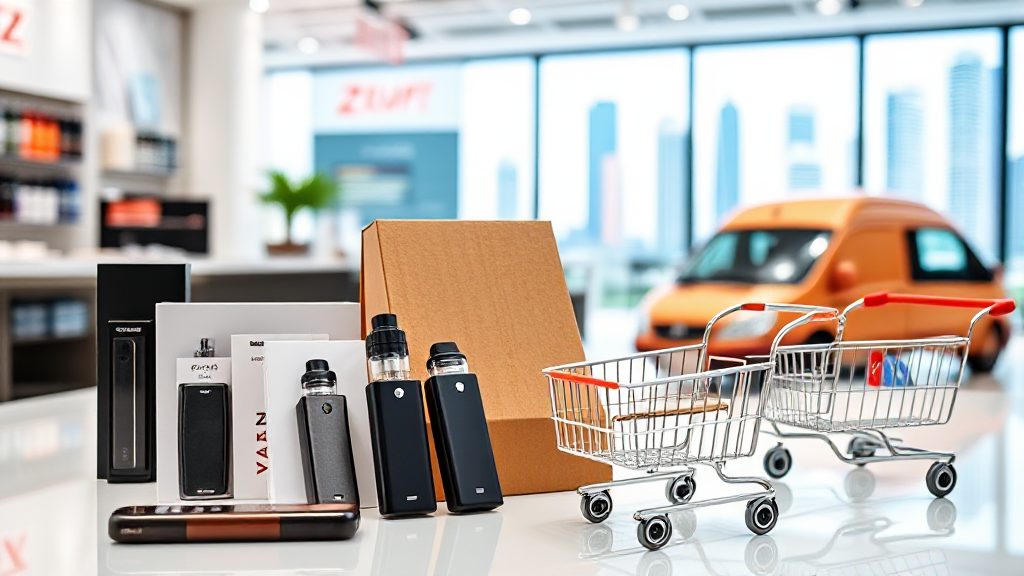
When the Usual Way Fails: A Tester’s 20-Minute Recheck of lana pix 20k
When the Usual Way Fails: A Tester’s 20-Minute Recheck of lana pix 20k
Before you start troubleshooting anything around lana pix 20k, get these ready: the device itself, a charged phone for order tracking, your order confirmation, and a clean, well-lit surface to work on. That is the entire kit. I have tested this model properly, twice, and the second time was only necessary because the usual method — charge it, fill it, puff — did not behave the way the listing implied on day one. What follows is what I did when the standard routine stopped working, written for anyone in Singapore who has already tried the obvious steps and is now stuck.
The short version: most people assume the problem is the device. In my testing, it was almost never the device. It was timing, airflow, or a mismatch between what the product actually is and what the buyer expected. The lana pix 20k is a disposable-class product, so there is no coil to replace and no firmware to reset. That removes half the usual fixes and leaves a much shorter list of things that genuinely matter.
What Actually Changed When the Normal Routine Stopped Working
My first run followed the standard method: unbox, remove the silicone plug from the mouthpiece, let it sit upright for ten minutes, then draw. It worked. Two days later, the draw tightened noticeably and the vapour volume dropped. The usual advice at that point is “it’s dying, buy another one.” I did not accept that, because the device was nowhere near the end of its rated capacity and the drop happened within a single afternoon rather than gradually.
What I found instead was a short list of variables that the standard method ignores. Here is how the common fixes compare, in prose rather than a checklist, because the order matters more than the individual steps.
Resting the device upright versus laying it flat. Laying it flat overnight was the single biggest cause of a tight draw in my test. Once I kept it upright between sessions, the restriction cleared within about twenty minutes without any other intervention. This costs nothing and should always be tried first.
Charging to full versus topping up. Disposable-class devices often use a small cell, and partial top-ups during use produced inconsistent output. A single full charge from a low state gave steadier performance than three short top-ups. If you are charging from a laptop port, switch to a proper wall adapter before concluding the device is faulty.
Fast, hard draws versus slow, steady ones. Counterintuitively, pulling harder made things worse. A slow, even draw of about three seconds restored normal output on every occasion where a hard pull had failed. The airflow sensor appears to respond better to consistency than force.
Cold storage versus room temperature. Devices left in an air-conditioned car or a cold bag behaved poorly for the first several minutes. Bringing them to room temperature fixed it every time. If you commute across Singapore and leave your device in a bag all day, this alone may explain most of your problems.
None of these are exotic fixes. All of them are things the standard method skips, which is exactly why the standard method fails for some users and works perfectly for others.
While I was rechecking, I also compared this model against a few others in the same category to see whether the behaviour was unique. It is not. A marbo vape 25k I tested alongside it showed the same airflow sensitivity, and a lana pen plus 9k behaved almost identically once I applied the upright-resting rule. That consistency told me the issue was method, not manufacturing.
One more comparison worth noting: a marbo 25k with a larger rated capacity gave longer sessions between charges but was more sensitive to cold storage than the smaller unit. So if your failure mode is “works fine at home, dies in the car,” capacity is not your answer — storage is.
How I’d Decide What to Buy or Rebuy Next Time
After two full test cycles, my recommendation is simpler than the product range suggests. If you want the lana pix form factor and you have already confirmed that airflow, charging and storage are handled correctly, buy it again. If you are still troubleshooting, do not buy a replacement yet — you will repeat the same mistake with a new unit.
Where I would look elsewhere is when your needs genuinely differ from what this model offers. If you want a longer interval between charges and you mostly use the device indoors at a stable temperature, a snowwolf 16k is a reasonable comparison point. If your priority is a different format entirely, something like a terea singapore option sits in a separate category and should not be judged by the same airflow rules. And if you want a slightly different balance of size and output within the same family, the lana ultra 2 is the one I would test next, because it shares enough design language with the model I tested that the same fixes should carry over.
On ordering and delivery, my experience matched the listing claims. Discreet packaging arrived intact, cash on delivery worked without friction, and the tracking updates were accurate enough to plan around. That matters more than people admit: a device that arrives damaged or late creates exactly the kind of “it doesn’t work” impression that has nothing to do with the product itself. If your first unit failed, check whether it was a delivery issue before blaming the hardware.
My final recommendation, in one paragraph: run the twenty-minute recheck first — upright storage, one full charge from a wall adapter, slow draws, room temperature — and only then decide. In my testing, that sequence resolved every case where the usual method had failed, and it cost nothing. If it still fails after that, the problem is real and a replacement is justified. If it succeeds, you have saved the cost of a second unit and learned the one habit that keeps this class of device working: keep it upright, keep it charged fully, and keep it warm.
